
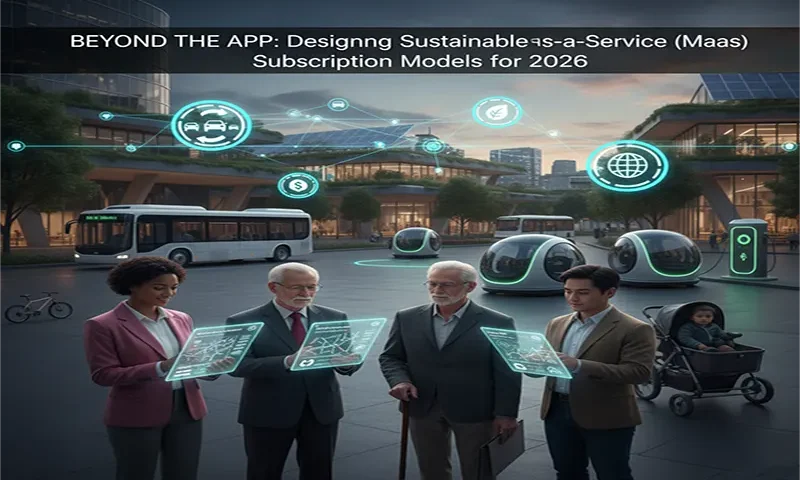
Beyond the App: Designing Sustainable Mobility-as-a-Service (MaaS) Subscription Models for 2026
By 2026, the promise of Mobility-as-a-Service (MaaS) has matured beyond the hype of “all-in-one” apps. We have moved from the era of digital novelty into an era of economic orchestration. The central challenge today is no longer building a slick interface; it is designing a sustainable subscription engine that aligns the incentives of public transit agencies, private mobility operators, and the urban commuter.
1. The Economics of the Subscription Bundle
The core of MaaS 2.0 is the subscription bundle. However, the industry is shifting away from simplistic, flat-fee “all-you-can-ride” models, which often lead to the “cannibalization of public transit”—where high-margin ride-hailing services lure users away from the backbone of public transport.
- Bundled Subscriptions: These offer a fixed monthly fee covering a baseline of transit (e.g., unlimited metro) plus a “credit bank” for micro-mobility (e-scooters, bike-share) or ride-hailing. This incentivizes users to reserve private modes only for specific needs, such
