Navigating Auto Insurance After 70: A Senior’s Guide to Finding Affordable Coverage

Reaching your 70s is a milestone that brings many life changes, from retirement to a shift in daily routines. Unfortunately, many seniors notice a common trend around this time: their auto insurance premiums begin to climb. While this can feel personal, it is important to understand that this is rarely a reflection of your individual driving history. Instead, it is a business calculation based on actuarial data.

The good news is that by taking a proactive approach to managing your policy, you can mitigate these increases and keep your coverage affordable.

1. The “Why” Behind the Rate Hike

Insurers rely on “risk curves” to set premiums. As drivers enter their 70s and 80s, statistics show a slight increase in the frequency of certain types of accidents and an increase in the cost of medical claims due to physical fragility. Because insurance is a system of pooled risk, carriers adjust rates … READ MORE >>>

The Low-Mileage Advantage: Navigating Usage-Based Auto Insurance in 2026

For decades, auto insurance premiums were calculated based on broad statistical buckets: your age, your zip code, and the make of your car. If you worked from home or only drove on weekends, you were still subsidizing the risk of commuters stuck in daily rush-hour traffic.

In 2026, the landscape has shifted toward dynamic pricing. Usage-Based Insurance (UBI) allows your premiums to align more closely with your actual driving habits. If you drive less, or if you drive with precision and caution, you are no longer just a statistic—you are a low-risk asset. Here is how to navigate the two primary types of UBI and determine if it is the right financial move for your lifestyle.

1. The Economic Case: Why Fewer Miles Equal Fewer Dollars

The insurance industry operates on the “risk-exposure” model. Simply put: the less time your vehicle spends on the road, the lower the probability … READ MORE >>>

The Crucial Distinction: Unpacking ‘Car Life Insurance’ and Protecting Your Family

For many, a new car brings excitement, freedom, and – often – a significant loan. As you sign the paperwork, you might encounter an offer for something vaguely termed “car life insurance.” This phrase, while seemingly reassuring, can be deeply misleading. What exactly are you being offered, and more importantly, what type of insurance truly protects your family’s financial well-being if you were no longer there to make those car payments? Let’s unpack the crucial distinction between credit life insurance for your car loan and comprehensive personal life insurance.

Deep Dive: Credit Life Insurance for Your Car Loan

When a lender offers “car life insurance,” they are almost certainly referring to credit life insurance. This is a specific type of policy designed to protect the lender, not your family directly. Here’s how it works: if the borrower (the person who took out the car loan) passes away, the … READ MORE >>>

Mastering Auto Financing: Your Guide to the Best Car Loan

The excitement of buying a car can quickly turn into anxiety in the finance office. For most people, auto financing is one of the most expensive and least understood transactions they will ever make. The biggest mistake buyers make is relying solely on the dealer to arrange financing. This cedes control of the negotiation, often resulting in higher rates and thousands of dollars in unnecessary interest over the life of the loan. Successful auto financing is a battle won before you start shopping for the car, by establishing direct lending through pre-approval.

Know Your Financial Scorecard

Before you even browse listings, you must understand the financial metrics that determine your borrowing cost. The lender uses three critical factors to set your rate:

  1. Credit Score: Your FICO score is paramount. Buyers with scores above 740 typically qualify for the lowest promotional rates. If your score is below 680, dedicating time to
… READ MORE >>>
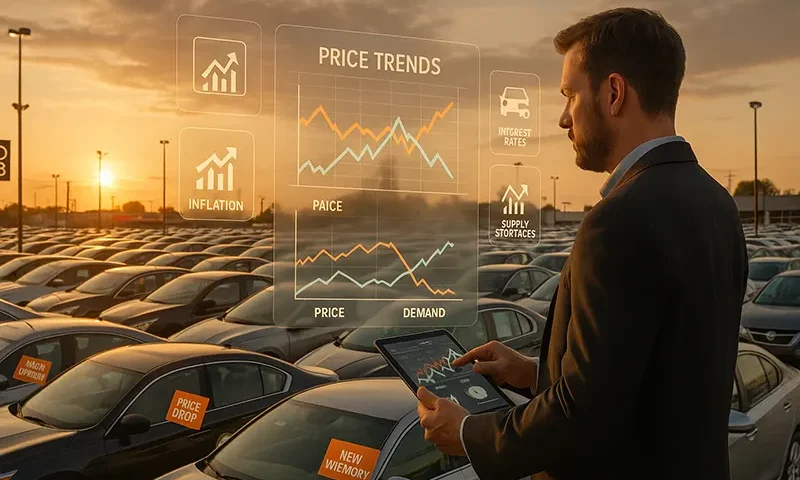
Driving the Volatility: The Boom, the Bust, and the Economic Forces Reshaping the Used Car Business

The used car market is the largest, most active segment of the global auto industry, yet for decades it remained predictable, defined by consistent depreciation. That changed dramatically over the last few years. At one point, used car values were appreciating faster than many assets, leaving both dealers and consumers reeling. This period of unprecedented volatility was the result of a perfect storm of supply shortages and unusual consumer demand, and its ripple effects are still profoundly reshaping how the car business operates for dealers, lenders, and everyday drivers.

The Anatomy of the Boom (2020–2022)

The seismic shift in the used car market began with a cascade of failures in the new car supply chain. The primary catalyst was the semiconductor shortage. Modern vehicles require dozens of advanced computer chips, and when global chip production slowed or halted during the pandemic, major manufacturers were forced to drastically cut production. … READ MORE >>>