
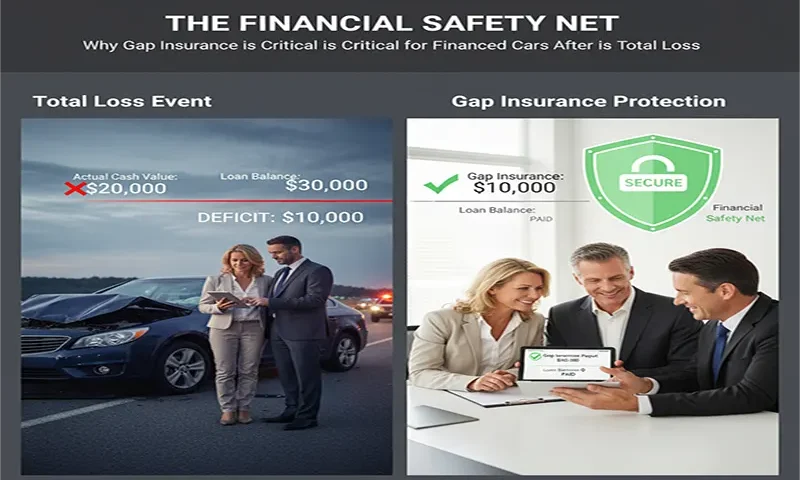
The Financial Safety Net: Why Gap Insurance is Critical for Financed Cars After a Total Loss
When you finance a vehicle, you are entering into a legal agreement to pay back a specific amount of money, regardless of what happens to the car. Many new car owners operate under the assumption that their comprehensive auto insurance will “make them whole” if the vehicle is totaled. Unfortunately, that is often a costly misconception.
If your vehicle is declared a total loss, your primary insurance provider pays only the Actual Cash Value (ACV)—the fair market value of the car at the time of the accident—not what you paid for it or what you currently owe on your loan. Because new cars depreciate rapidly, there is often a significant difference between your loan balance and your car’s market value. This is known as the “depreciation gap,” and without Gap Insurance, that gap is a debt you are legally required to pay out of your own pocket.
1.
… READ MORE >>>