
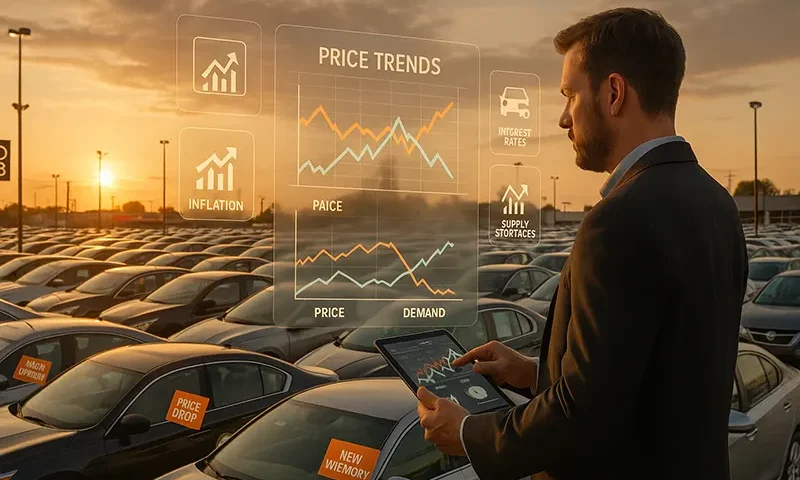
The used car market is the largest, most active segment of the global auto industry, yet for decades it remained predictable, defined by consistent depreciation. That changed dramatically over the last few years. At one point, used car values were appreciating faster than many assets, leaving both dealers and consumers reeling. This period of unprecedented volatility was the result of a perfect storm of supply shortages and unusual consumer demand, and its ripple effects are still profoundly reshaping how the car business operates for dealers, lenders, and everyday drivers.
The Anatomy of the Boom (2020–2022)
The seismic shift in the used car market began with a cascade of failures in the new car supply chain. The primary catalyst was the semiconductor shortage. Modern vehicles require dozens of advanced computer chips, and when global chip production slowed or halted during the pandemic, major manufacturers were forced to drastically cut production. New car inventory vanished from dealer lots, creating a sudden and severe bottleneck.
This supply collapse coincided with an equally powerful surge in demand. As consumers received economic stimulus checks and shifted away from public transportation, the need for personal vehicles skyrocketed. With no new cars available, buyers flooded the used market. Since a typical used car inventory is primarily fueled by trade-ins from new car purchases, the lack of new car sales meant a critical shortage of 1- to 3-year-old vehicles. This classic supply-demand imbalance drove prices up at a frantic pace, pushing vehicle prices far beyond their historical depreciation curve.
The Business Model Shift: Inventory and Profit
This economic anomaly forced a fundamental change in how the retail car business operated. For decades, the dealer model was predicated on high volume and low margins. Dealers made money by moving many vehicles quickly. The boom flipped this entirely.
With inventory scarce, dealers shifted to a low volume, high margin strategy. They were able to sell every used car they acquired—often purchased at record auction prices—for maximum profit, as buyers were desperate and willing to pay premiums. This period cemented the rise of digital-first used car retailers. Companies that had already invested in sophisticated online inventory management and transparent pricing models gained significant market share, forcing traditional dealerships to accelerate their own digital transformation and embrace greater price clarity. The ability to source and value inventory became the single most important competitive advantage.
The Return to Normalcy (and Risks)
Starting in late 2023 and into 2024, the market began a slow, necessary correction. New car production has largely stabilized, leading to improved dealer inventory and a corresponding drop in used car prices. While prices are unlikely to return to pre-pandemic levels due to permanently higher manufacturing costs, the rapid appreciation has ended, and depreciation has resumed.
However, the rapid boom created a dangerous financial hangover: the prevalence of “underwater” loans, also known as negative equity. Millions of consumers financed vehicles at peak inflation (sometimes taking out overly long 72- or 84-month loans) when prices were artificially high. As the market value of their vehicle normalizes and depreciates, many now owe significantly more to the lender than the car is worth. This negative equity is a risk to consumers, lenders, and the wider automotive business, as it traps buyers in their current vehicle and stifles future trade-in activity.
Conclusion and Consumer Action
The volatility of the recent past has proved that the used car market is not immune to global supply chain and economic shockwaves. The business has become more digitally driven, more transparent (out of necessity), and permanently more volatile.
For the modern consumer, the key is caution and preparation. As the market corrects, every buyer must prioritize protecting their equity. Advise current owners to avoid overly long loan terms and to focus on quickly paying down debt. When buying or trading, always get a third-party valuation from multiple sources to ensure your dealer quote reflects the current, correcting market reality. The era of predictable depreciation may be over, but smart financial planning remains the best protection in this newly energized, ever-changing business.

